I just saw a video title on YouTube that said something like “Why is glass transparent?” And that’s an interesting question and I’m sure it’s great that the video exists but my first thought was like “Because glass is terrible, obviously.” Because it’s unwieldy and let’s out warmth and needs to be heated to hundreds of degrees to be shaped and turns into hundreds of tiny daggers if you drop it. Why the hell would we bother with that if it didn’t have some magical quality like being totally transparent despite being solid? Glass is transparent because if it weren’t, we’d use something else.
looking through my “me” tag and this is apparently what I was thinking 3 years ago
If you’re still curious we did not start working glass for its transparency. It was most likely started as a sanitary concern. Glass is easy to clean with soap and water, once it’s cleaned out you can use it again for anything and no germs or flavor from the previous meal or drink will remain.
Other materials at the time, namely clay, would absorb flavors and germs meaning that if you ate beef off a clay plate your next meal with that plate could have beef flavor and microbes common on cow meat on it. That would leak out seemingly at random no less. Heck imagine a sick person coughing into their soup bowl and then months later their germs hiding in the clay would pop out to infect whole new people.
Also the earliest human use of glass we know of is for its sharpness. Pre-historic people would use volcanic glass as sharp knives for food preparation. Also beads. Pretty much any new substance humans get their hands on for most of our history we immediately try to make into beads.
The fact that it could become see through was a side benefit.
this is amazing and I’m really glad I reblogged that old bullshit post because I got to learn this
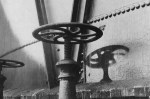
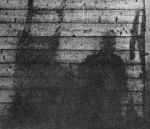
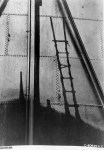
In Hiroshima, there are permanent shadows caused by the intensity of the blast from the bomb that was dropped. Nuclear bombs emit EM(electromagnetic) radiation which was absorbed by the people or objects that were in front of the radiation. So if they were far enough away from the blast, they wouldn’t have been incinerated, but still would have cast a shadow.
Since thermal radiation is light, and since light travels from a central point, everything in its path is burned except when there is something blocking it, so it creates this shadow effect. The surfaces behind the matter (the objects you see the shadows of) received much less radiation bleaching so there is a visible difference
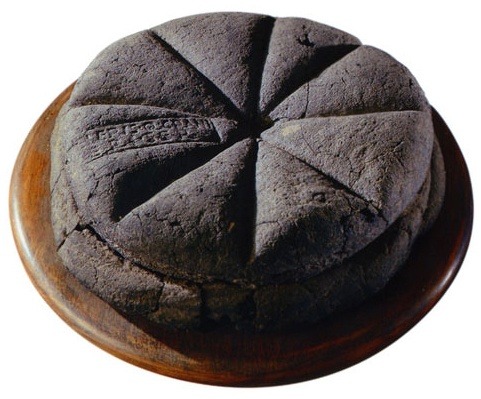
A loaf of bread made in the first century AD, which was discovered at Pompeii, preserved for centuries in the volcanic ashes of Mount Vesuvius. The markings visible on the top are made from a Roman bread stamp, which bakeries were required to use in order to mark the source of the loaves, and to prevent fraud. (via Ridiculously Interesting)
(sigh) I’ve seen these before, but this one’s particularly beautiful.
I feel like I’m supposed to be marveling over the fact that this is a loaf of bread that’s been preserved for thousands of years, and don’t get me wrong, that’s hella cool. But honestly, I’m mostly struck by the unexpected news that “bread fraud” was apparently once a serious concern.
Bread Fraud was a huge thing, Bread was provided to the Roman people by the government – bakers were given grain to make the free bread, but some of them stole the government grain to use in other baked goods and would add various substitutes, like sawdust or even worse things, to the bread instead. So if people complained that their free bread was not proper bread, the stamp told them exactly whose bakery they ought to burn down.
Bread stamps continued to be used at least until the Medieval period in Europe. Any commercially sold bread had to be stamped with an official seal to identify the baker to show that it complied with all rules and regulations about size, price, and quality. This way, rotten or undersized loaves could be traced back to the baker. Bakers could be pilloried, sent down the streets in a hurdle cart with the offending loaf tied around their neck, fined, or forbidden to engage in baking commercially ever again in that city. There are records of a baker in London being sent on a hurdle cart because he used an iron rod to increase the weight of his loaves, and another who wrapped rotten dough with fresh who was pilloried. Any baker hurdled three times had to move to a new city if they wanted to continue baking.
If you have made bread, you are probably familiar with a molding board. It’s a flat board used to shape the bread. Clever fraudsters came up with a molding board that had a little hole drilled into it that wasn’t easily noticed. A customer would buy his dough by weight, and then the baker would force some of that dough through the hole, so they could sell and underweight loaf and use the stolen dough to bake new loafs to sell. Molding boards ended up being banned in London after nine different bakers were caught doing this. There were also instances of grain sellers withholding grain to create an artificial scarcity drive up the price of that, and things like bread.
Bread, being one of the main things that literally everyone ate in many parts of the world, ended up with a plethora of rules and regulations. Bakers were probably no more likely to commit fraud than anyone else, but there were so many of them, that we ended up with lots and lots of rules and records of people being shifty.
Check out Fabulous Feasts: Medieval Cookery and Ceremony by Madeleine Pelner Cosman for a whole chapter on food laws as they existed in about 1400. Plus the color plates are fantastic.
ALL OF THIS IS SO COOL
I found something too awesome not share with you!
I’m completely fascinated by the history of food, could I choose a similar topic for my Third Year Dissertation? Who knows, but it is very interesting all the same!
Bread fraud us actually where the concept of a bakers dozen came from. Undersized rolls/loaves/whatever were added to the dozen purchased to ensure that the total weight evened out so the baker couldn’t be punished for shorting someone.
[wants to talk about bread fraud laws and punishments]
[holds it in]
bread police
For people writing time pieces or fantasy pieces, check this stuff out! Just imagine writing about a hardened criminal who started as a baker or something.
I am now the proud mother of a 65 million year old Ammonite fossil. This little guy went extinct the same time the dinosaurs did. It’s only living ancestor is the Nautilus. #history #fossils #ammonite
[image description: a page with “Her Breast Is Fit for Pearls” by Emily Dickinson on it. It reads “Her breast is fit for pearls, / But I was not a “Diver” – / Her brow is fit for thrones / But I have not a crest. / Her heart is fit for home – / I – a Sparrow – build there / Sweet of twigs and twine / My perennial nest.“ The reblog has a screencap of a John Mulaney stand up (Comeback Kid). He has one hand up, like he’s in a class, and is saying “I think Emily Dickinson’s a lesbian.”]
‘Oh Susie, I would nestle close to your warm heart, and never hear the wind blow or
the storm beat again…..thank you for loving me, darling ….dearer you cannot be, for
I love you so already that it almost breaks my heart – perhaps I can love you anew
every day of my life, every morning and evening (L74).’







 gayfeline