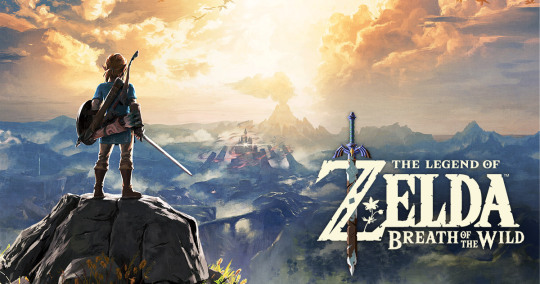
Breath of the Wild is still one of the most unique and gorgeous takes on a post-apocalyptic world in modern games, in my opinion. A lot of games with post-apocalyptic settings are very stark and colorless and alien and while those are interesting in their own right I still think that BotW’s take on it is just as fascinating and makes it stand out.
Hyrule was utterly destroyed. No matter where you believe it lands on the Zelda timeline, it’s undeniable that it came thousands of years after well established kingdoms we’ve seen within games in the franchise, and that’s before we even discuss the Sheikah technology that predated this iteration of Link. We know that the wild and open Hyrule we have now is a far cry from the established kingdoms we’ve seen. People were killed. Civilizations were ravaged, destroyed, and left empty. Existing towns are small, scattered, and isolated by a violent wilderness full of monsters.
Enormous mechs with land-altering properties and minds of their own threaten the livelihood of those remaining.
There are fields littered with the remains of nigh-unkillable robots, and some of them still prowl the forests and mountains. At the very center of it all, the apocalypse-bringer itself is only barely restrained from releasing its absolute fury on what’s left as it continues to bring monsters back from the dead time and time again.
And yet… the world is still so alive in spite of all its struggles. The dust has settled, but instead of being dark and devoid of life, nature has crept over the ruins and roads. Wildlife thrives, birds sing, and plants grow, including the rarest flower thought to have been nearly extinct making a slow return. The sunrise and sunset are still beautiful, even if that light is cast mostly on empty, grassy fields as far as the eye can see. Wild horses frolic among the remains of guardians. Strange and beautiful spirits soar through the air or shine between the trees. Great fairies watch over towns. Even though the terrain is dangerous, people have made roads and paths for merchants and adventurers who connect the towns and villages. Monsters and guardians haven’t stopped them from exploring, scavenging, and pioneering the wild. Yes, the people know that the world is full of danger which threatens to engulf them- it’s hard to ignore that when Hyrule Castle is so visible- but that hasn’t stopped them from gathering the remains and making the most of it. It isn’t the shining kingdom it once was, but the people have a newfound appreciation and respect for the wilderness that now spans it.
There’s just something so lovely and humbling about a setting which looks at the fallout of a magical kingdom and the new lives its people lead in the midst of a world that’s dangerous, seeing how they’re working on stringing themselves together again, and watching as they rekindle their hope… and all the while, the rest of the world keeps breathing. The sun still rises and the sun still sets.
I absolutely love the post-post-apocalyptic genre that’s starting to pop up in recent years. The end came, the end went, and that was a long long time ago. Now it’s all about building something new. Not just surviving in the ruins, but thriving in the wild, overgrown world that came after everything burned down.
It’s why I like New Vegas more than any other Fallout, but even that’s still pretty damn gritty and ruinous.
Breath of the Wild and Horizon: Zero Dawn are definitely the best recent examples, and both of them are absolutely beautiful. NieR: Automata also comes close, but aesthetically is closer to rubble and ash than regrowth and wildness. The timing of these three makes me feel like there’s a general trend in this direction in modern artistic designs, almost like we as a global culture have moved past our fascination/despair at the destruction and suffering of the end times and looked forward toward the future after whatever crises come our way.
Nausicaä of the Valley of the Wind is a prime example from all the way back in 1982. Tengen Toppa Gurren Lagann is another classic from 2007. But it seems like up until very recently, apocalyptic events almost always either happened so long before the story starts that civilization has already been completely rebuilt and you can’t tell that it happened without delving deep into historical lore, or the disaster happens during the story or very shortly beforehand.
I can’t help but feel this is connected to the generational thing where young people are getting progressively darker senses of humor and apathetic worldviews. Apocalyptic and post-apocalyptic stories are as old as time itself but it feels like most of them and the best of them came out when WWII and the Cold War were ramping up. An apocalypse scenario was a very real threat in the very immediate future and people got fascinated in theorizing what it was gonna be like and how we’d handle it. At this point though I think we’ve accepted the end times as an inevitability and trying to take solace in the idea that there’s going to BE an after, and maybe things don’t just keep getting worse forever.
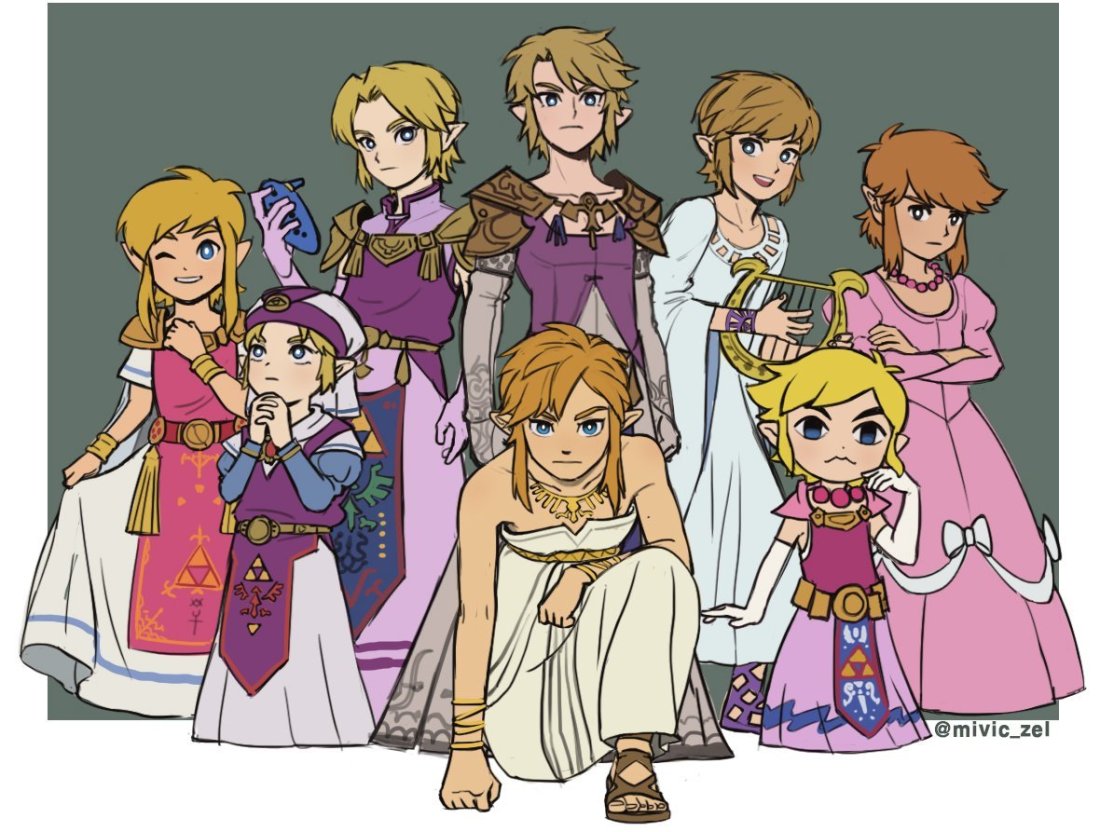
Random Headcanon: Link’s androgyny isn’t just an artefact of the Zelda franchise’s art direction – and neither is it particularly unusual. Sexual dimorphism among Hylians is legitimately much lower than among real-world humans; if Link and Zelda swapped clothes, you’d never be able to tell who was the girl and who was the boy.
Consequently, Hylian society depends heavily on clothing to establish gender roles, to the extent that it’s a severe faux pas to question someone’s gender presentation. If they’re dressed like a girl, then they’re a girl – even if they were dressed like a boy yesterday. That’s why nobody ever remarks upon the fact that Zelda and her heroic alter-ego Sheik are different genders; it’d be gauche at best to bring it up.
Good post op
explains why i can be banned from gerudo town, change clothes in front of the guards, and then be welcomed with open arms
shit, this absolutely provides an explanation for it that isn’t just “lazy game mechanism” and is honestly such a solid demonstration of how people should approach genderfluidity.
doesn’t matter if the first time you met the person they presented as male, if they present as female now that means they’re a woman and they’re welcome into gerudo town no questions asked
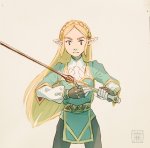
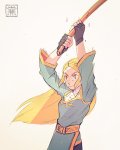
Also, Link and Zelda 100% do swap places often and you can’t tell me otherwise.
“Princess Zelda, Ganon has made his way into the kingdom! What should we do?!”





 gayfeline