I wanted to do a quick safety guide to spirit work (been wanting to do this for a long time, tb).
Around Halloween, it becomes a favorite
hobby of everyone, and while I think spirit work is an awesome way to enhance
your craft, I also think you need to take it incredibly slow. Here’s some tips
that I use, and I would advise for those of you who’re delving into spirit work
to use as well:
-Protection: This
applies to yourself and your space. Often I wear protective jewelry and meditate
before I begin spirit work. I put myself in a mindset where I’m in control of what’s
going on, so that I know who I’m talking to or who I want to talk to.
-Be specific: Don’t
just call out to random spirits. If you don’t have a name in mind—that’s find. But
specify that you want good spirits entering your space—and only good spirits. If
you’re not used to spirit work, asking for any spirit to come through the veil
can attract negative spirits.
-Say goodbye: You
must say goodbye to the spirits. This is something I practice daily, because
they do and will linger around if you don’t! even if they are good, maybe it’s
not something you want. Good can also be scary. And thank them for their time as well.
-Banishment: This
is essentially telling a clingy spirit to leave if they haven’t already. There is a variety of different ways to tell
a spirit
-Cleanse: Cleanse
your space afterwards just to ward off any remaining energy. This isn’t quite
the same concept as banishment, as with banishment you’re dealing with an
entire entity. But, with every ritual
you do and every entity you invite into your space, left over energy can stay
and build up. So, you’ll want to cleanse it. this too can be done a variety of
ways (I have cleansing crystals with me, so I usually skip this step).
-Choose a safe means
of communication: Basically, if you are a beginner DO NOT use the Ouija
board. I might be biased against it, but I also know that the tool can be used
correctly and yield amazing results. However, because many beginners using it
don’t do so correctly (and there’s a terrible culture attached to it), I advise
you to try safer methods. Consider a pendulum, dice, and automatic writing. Or even
the safest form (imo), mediation.
any means of communication can turn out badly if you don’t know what you’re doing though.
-Ask for the
intercession of other spirits: In general, before you begin spirit work,
look for a spirit that might help you. this can be your guide, your ancestors,
or a religious deity. Now if you’re all trying to do spirit work on Halloween,
you probably going to skip this part because it can take a very long time. but
perhaps instead of reaching out to random spirits on Halloween, use it as a
time to find a spirit companion.
–Use things to safely
enhance your experience: My go to is selenite! Others have different
things, just stay safe and healthy!
Also just do your
research! Feel free to ask around. Tumblr is one of the largest collections of witches
I’ve ever seen on the internet so please, please take advantage of that!
If I have anything else to add, I’ll do so later on! These—again—are
all based on personal experience, but if you have any questions about anything
ask me. I also invite others to add their own opinions and suggestions! Being
rude won’t be tolerated!
Hello~ I figured I’d make my first master-post about Tarot! This is my interpretation, so I don’t ask that you just go by my word. It’s your path! I’m just here to try to help.
This will be VERY in-depth. So I apologize in advance for the lengthy post, but I hope it will help.
What is “Tarot”?
Personally for myself I see Tarot as a tool. I use it to help myself and others with some guidance with their lives; however, when it comes to Tarot, don’t let it rule over your decisions in your life. It is a tool but that does not mean that you should only go by what it says.
Types of Readings
There are two types of readings when it comes to Tarot: Question readings and Open Readings.
Question Readings
Just as the title says Tarot involves answering questions. Yes or No questions aren’t meant to be answered by Tarot. When it comes to Yes or No questions pendulums are used with their corresponding charts. Like I stated before, you shouldn’t use Tarot to make decisions but to guide you to help you make the decision yourself. The way a question is stated is important for Tarot readers. Here’s a few tips on what you should look out for:
🔮
Keeping your options open: If you already have an answer for your question, then you’re not really letting yourself allow the cards to guide your decision.
Asking how you could encourage your mother-in-law to move out, as opposed to asking how you can get along better with her, is narrowing the scope of the true question by answering it before you even get started.
🔮
Details: Your question should be focused, but not overly detailed. Rather than looking at one particular aspect of a problem, find a way to look more broadly at it. For example, rather than asking how you can make your home life less chaotic, ask how you can better balance work schedules and school schedules. That is a focused question. But do not go so far as to ask how you can coordinate baseball, soccer and karate schedules and still have family time – that’s too detailed. Only include the minimum level of detail needed in order to express what you want to learn from the cards.
🔮
Focus on Yourself: If the reading is for yourself, make sure your question focuses on you rather than on someone else who you think may be the root of your problem. If you’re wanting to help someone, for example, ask about what you can do to help them.
🔮
Stay Neutral: Basically be unbiased. Don’t come off with the notion that your POV is the “right” one. Asking why you’re always the one getting yelled at between you and your parent(s) isn’t neutral; instead, ask how you can prevent future arguments with your parent(s). That’s neutral!
🔮
Be Positive: When it comes to Tarot, and anything really, you’ll want to always try to be positive. Instead of asking why a specific event didn’t happen, ask about what you can do to make that event happen. Positivity is always great!
Open Readings
These are also known as “General” readings. They address the larger aspects of life rather than a question or a specific area. I’ve found that Past, Present, Future readings are very popular since it talks about people’s lives. They’re always eager to see if the cards can truly tell about their life! You can also direct the General readings towards a basic “genre”. Career, Health, Finances, Love, etc.
The Tarot Deck
There are many varieties of Tarot decks, and there is no standard number of cards across all decks. While the types of cards, the suits and their meanings are the same, the illustrations vary greatly. Decks are based on various themes such as nature, animals, fantasy, dragons, etc.
When it comes to finding a deck of your own, don’t just choose one based on the design. Focus on the connection between you and your future tool, your future guide. I have the Tarot Draconis Deck that called to me. It’s a beautiful dragon based deck that has connected with me. The bond we have today is inseparable!
I say “bond” because each deck has it’s own personality. That’s why Tarot readers do interview “spreads” to help them get to know their decks a bit better. I’ll explain spreads more thoroughly later on in this post. When it comes to their personalities, some decks are blunt, some are meant for giving other people readings and others could be laid back.
The Major and Minor Arcana
When you look through a Tarot Deck, there will be two different sets of cards: Major Arcana and Minor Arcana. Let’s look at the Minor Arcana first. You’ll find that like regular playing cards there are four suits; however, instead of hearts, spades, diamonds, and clubs there are Wands, Pentacles (Circles), Cups (Chalices), and Swords. Each of these represents an element.
Each suit has meaning regarding a specific approach to life. The cards within these suits are numbered one through 10 and also include the court cards – the king, queen, knight and page (knave). The Minor Arcana cards represent the more minor, practical daily ups and downs in life.
The Major Arcana are not associated with the suits. They include the picture cards that represent principles, concepts and ideals. They are numbered one through 21, with the 22nd card (the “Fool”) marked as zero. The Major Arcana cards represent strong, long-term energy or big events in some area of life.
Minor Arcana and the Four Suits
As I stated before, each of the Suits represents an element. Let’s talk about each one and break down what they mean, as well as the cards within them. Then we’ll move on to the Major Arcana!
When it comes to the different cards, there are negatives and positives. When a card is upside-down, the term being “reversed”, then it represents negative attributes of that card. When it’s upright then it represents positive attributes.
For myself, I don’t read reverse cards. I base it on my intuition. I’ll explain how your intuition is used with tarot later on in this post.
Suit of Pentacles
🌱Also known as Coins, Disks, or Circles.
🌱Represents the element Earth.
🌱Covers material aspects of life including work, business, trade, property, money and other material possessions.
🌱 Pentacles deal with the physical or external level of consciousness and thus mirror the outer situations of your health, finances, work, and creativity. They have to do with what we make of our outer surroundings – how we create it, shape it, transform it and grow it.
🌱 On a more esoteric level, Pentacles are associated with the ego, self-esteem and self-image.
🌱 The positive aspects of the Suit of Pentacles include manifestation, realization, proof and prosperity.
🌱 The negative aspects of the Suit of Pentacles (i.e. when the Pentacles cards appear reversed) include being possessive, greedy and overly materialistic, over-indulging and not exercising, not effectively managing one’s finances, and being overly focused on career to the detriment of other life priorities.
Often what is required to counteract these negative aspects is a return to nature to ground oneself and rediscover what is truly important. In addition, there may be blockages in being able to manifest ideas and plans resulting in a lack of success. Better goal-setting and planning is required.
🌱 When referring to timing in a Tarot reading, the Suit of Pentacles traditionally represents Winter or years.
🌱 In a deck of playing cards, Pentacles corresponds to Diamonds.
Upright – Balance, adaptability, time management, prioritisation
Reversed – Disorganisation, financial disarray
Ace of Pentacles:
Upright – Manifestation, new financial opportunity, prosperity
Reversed – Lost opportunity, lack of planning and foresight
Suit of Swords
🌫️ Represents the element Air.
🌫️ Associated with action, change, force, power, oppression, ambition, courage and conflict.
🌫️
Action can be both constructive and/or destructive, sometimes resulting in violence. This suit can also mean hatred, battle, and enemies, and of all the suits, this one is considered to be the most powerful and dangerous.
🌫️
The Suit of Swords deals with the mental level of consciousness that is centred around the mind and the intellect. Swords mirror the quality of mind present in your thoughts, attitudes, and beliefs.
🌫️
Swords themselves are double-edged and in this way the Suit of Swords symbolises the fine balance between intellect and power and how these two elements can be used for good or evil. As such, the Swords must be balanced by spirit (Wands) and feeling (Cups).
🌫️
The negative aspects of the Suit of Swords (i.e. when the Swords cards appear reversed) include anger, guilt, harsh judgement, a lack of compassion and verbal and mental abuse.
🌫️
When referring to timing in a Tarot reading, the Suit of Swords traditionally represents Autumn (Fall), or months.
🌫️
In a deck of playing cards, Swords corresponds to Spades.
🌫️ Court Cards // 1 – 10
🌫️
King of Swords:
Upright:
Clear thinking, intellectual power, authority, truth
Raw power, victory, break-throughs, mental clarity
Reversed:
Confusion, chaos, lack of clarity
Suit of Wands
🔥 Represents the element Fire.
🔥 Associated with primal energy, spirituality, inspiration, determination, strength, intuition, creativity, ambition and expansion, original thought and the seeds through which life springs forth.
🔥
Wands deal with the spiritual level of consciousness and mirror what is important to you at the core of your being.
🔥
They address what makes us tick – our personalities, egos, enthusiasms, self-concepts, and personal energy, both internal and external.
🔥
Wands are also indicative of all things that you do during the day to keep you busy, be it working at the office, home or the great outdoors.
🔥
Wands have to do with movement, action and initiatives and the launching of new ideas.
🔥
They may be indicative of a never-ending ‘Ideas List’ or ‘To Do List’, whereby the client has many projects on the go to keep them busy.
🔥
When referring to timing in a Tarot reading, the Suit of Wands traditionally represents Spring or weeks.
🔥
In a deck of playing cards, Wands corresponds to Clubs.
Reversed: Delays, lack of motivation, weighed down
Suit of Cups
🌊 Represents the element Water.
🌊 Also known as Chalices.
🌊 Deals with the emotional level of consciousness and are associated with love, feelings, relationships and connections.
🌊
Cups are about displays of emotion, expression of feelings and the role of emotions in relation to others.
🌊 The Cups Tarot cards indicate that you are thinking with your heart rather than your head, and thus reflect your spontaneous responses and your habitual reactions to situations.
🌊
Cups are also linked to creativity, romanticism, fantasy and imagination.
🌊
The negative aspects of the Suit of Cups (i.e. when the Cups cards appear reversed) include being overly emotional or completely disengaged and dispassionate, having unrealistic expectations and fantasizing about what could be.
There may be repressed emotions, an inability to truly express oneself and a lack of creativity.
🌊
The Suit of Cups traditionally represents the west and Summer. If using an ordinary deck of playing cards,
🌊
Cups are represented by the Suit of Hearts.
🌊 Court Cards // 1 – 10
🌊
King of Chalices:
Upright: Emotional balance and control, generosity
🔮 – If a Tarot reading is predominantly made up of the Minor Arcana Tarot cards, you are dealing with day-to-day issues which will not necessarily having a lasting influence on your life.
These issues are passing through, presenting you with an opportunity to learn from these experiences (look to any Major Arcana cards to identify and understand these lessons and how they may impact your life in the long-term).
Major Arcana
The Major Arcana Tarot cards (also known as the trump cards) form the foundation of the Tarot deck and consists of twenty-one numbered cards and one unnumbered card (the Fool).
They represent a path to spiritual self-awareness and depict the various stages we encounter as we search for greater meaning and understanding. In this way, they hold deeply meaningful lessons.
The Major Arcana Tarot card meanings illustrate the structure of human consciousness and, as such, hold the keys to life lessons passed down through the ages. The imagery of the Major Arcana Tarot cards is filled with wisdom from multiple cultures and esoteric traditions, including the Egyptian, Buddhist, Hindu, Sufi, Hebrew and Christian religions.
The Cards
0 // The Fool –
Upright: Beginnings, innocence, spontaneity, a free spirit
Now that we’ve talked about the Minor and Major Arcanas, let’s talk about Tarot spreads! Before any Tarot reader does a reading, they shuffle their cards. This allows them to transfer their energy into the deck.
Once the cards are shuffled and the deck has been cut, the reader lays out the cards in a pattern called the spread. Each position in the spread has a meaning, and there are many different types of spreads, ranging from those that incorporate a single card to spreads that include all 78 cards of the deck. Which spread is used is up to the reader and the specific type of question or reading. Some spreads focus more on a specific type of information. For example, one spread might focus more on emotional matters, while another might bring in more information about the influences of others. One of the most common spreads is the Celtic Cross.
Interpreting the Spread:
Once the cards are laid out, their meanings are interpreted based on their positions and their neighboring cards. Let’s look at the Celtic Cross spread:
Begin by looking at the Circle/Cross section. The cards in this position represent what is happening in your life at the time of the reading.
Next, look at the first six cards in pairs. These cards paint a picture of your immediate situation. The cards in position 1 (the central issue) and position 2 (the secondary issue that can either be opposing or reinforcing) will identify the central theme of the reading. The cards in position 3 (the root cause that can be an unconscious influence or deeper meaning) and position 5 (your attitudes and beliefs, a conscious influence, your goal or an alternate future) represent things that are going on within you at different levels. And, the cards in position 4 (your past, a receding influence or something that has been resolved) and position 6 (the future or an approaching influence or unresolved factor) represent how people and events are flowing through your life.
Next, look at the Staff section of the spread, again considering cards in pairs. Looking at the cards in position 7 (as you are, as you could be, as you present yourself and as you see yourself) and position 8 (your outside environment, someone else’s point of view and you as others see you) tells you about your relationship with your environment.
Finally, look at the card in position 10 (the outcome-overall, your inner state, your actions or effects) to see the projected outcome.
Ask yourself how you feel about the projected outcome. What does it say to you?
Go back and review the cards that led up to that outcome, and see if there is a card that stands out as they key to that outcome. Then, look back at card 5 to see if the projected outcome is also shown as an alternate outcome there. Look at the card representing the near future in position 6 to see if it supports or contributes to the projected outcome. Finally, look at the card in position 9 (guidance, key factors, hopes and fears or overlooked factors) to see there is any relevance there.
This is one of many different spreads. You can even make your own spreads! Ultimately, start small and learn as you go. Spreads are very easy once you get the hang of it.
Intuition
Last but certainly not least, we’re going to talk about Intuition!
What is intuition? A thing that one knows or considers likely from instinctive feeling rather than conscious reasoning.
When it comes to Tarot cards, and giving out readings or doing one for yourself, intuition is key. Witchcraft in general involves intuition 9 times out of 10! For example, when I do my readings for people, I don’t just go by what the cards mean. I trust my intuition about what it means, with my gut feeling. If I feel it’s something to do with family, I go with it. If it has something to do with an important event coming up in the future, I trust it.
You may not get it down right away, and that’s perfectly okay! It’ll take some time to get it down pat. Just don’t forget to listen to your gut!
There you go! I hope this Master Post helps you guys learn a little more about Tarot. I’ll be posting another one later for in-depth descriptions of all the cards!
Hello~ I figured I’d make my first master-post about Tarot! This is my interpretation, so I don’t ask that you just go by my word. It’s your path! I’m just here to try to help.
This will be VERY in-depth. So I apologize in advance for the lengthy post, but I hope it will help.
What is “Tarot”?
Personally for myself I see Tarot as a tool. I use it to help myself and others with some guidance with their lives; however, when it comes to Tarot, don’t let it rule over your decisions in your life. It is a tool but that does not mean that you should only go by what it says.
Types of Readings
There are two types of readings when it comes to Tarot: Question readings and Open Readings.
Question Readings
Just as the title says Tarot involves answering questions. Yes or No questions aren’t meant to be answered by Tarot. When it comes to Yes or No questions pendulums are used with their corresponding charts. Like I stated before, you shouldn’t use Tarot to make decisions but to guide you to help you make the decision yourself. The way a question is stated is important for Tarot readers. Here’s a few tips on what you should look out for:
🔮
Keeping your options open: If you already have an answer for your question, then you’re not really letting yourself allow the cards to guide your decision.
Asking how you could encourage your mother-in-law to move out, as opposed to asking how you can get along better with her, is narrowing the scope of the true question by answering it before you even get started.
🔮
Details: Your question should be focused, but not overly detailed. Rather than looking at one particular aspect of a problem, find a way to look more broadly at it. For example, rather than asking how you can make your home life less chaotic, ask how you can better balance work schedules and school schedules. That is a focused question. But do not go so far as to ask how you can coordinate baseball, soccer and karate schedules and still have family time – that’s too detailed. Only include the minimum level of detail needed in order to express what you want to learn from the cards.
🔮
Focus on Yourself: If the reading is for yourself, make sure your question focuses on you rather than on someone else who you think may be the root of your problem. If you’re wanting to help someone, for example, ask about what you can do to help them.
🔮
Stay Neutral: Basically be unbiased. Don’t come off with the notion that your POV is the “right” one. Asking why you’re always the one getting yelled at between you and your parent(s) isn’t neutral; instead, ask how you can prevent future arguments with your parent(s). That’s neutral!
🔮
Be Positive: When it comes to Tarot, and anything really, you’ll want to always try to be positive. Instead of asking why a specific event didn’t happen, ask about what you can do to make that event happen. Positivity is always great!
Open Readings
These are also known as “General” readings. They address the larger aspects of life rather than a question or a specific area. I’ve found that Past, Present, Future readings are very popular since it talks about people’s lives. They’re always eager to see if the cards can truly tell about their life! You can also direct the General readings towards a basic “genre”. Career, Health, Finances, Love, etc.
The Tarot Deck
There are many varieties of Tarot decks, and there is no standard number of cards across all decks. While the types of cards, the suits and their meanings are the same, the illustrations vary greatly. Decks are based on various themes such as nature, animals, fantasy, dragons, etc.
When it comes to finding a deck of your own, don’t just choose one based on the design. Focus on the connection between you and your future tool, your future guide. I have the Tarot Draconis Deck that called to me. It’s a beautiful dragon based deck that has connected with me. The bond we have today is inseparable!
I say “bond” because each deck has it’s own personality. That’s why Tarot readers do interview “spreads” to help them get to know their decks a bit better. I’ll explain spreads more thoroughly later on in this post. When it comes to their personalities, some decks are blunt, some are meant for giving other people readings and others could be laid back.
The Major and Minor Arcana
When you look through a Tarot Deck, there will be two different sets of cards: Major Arcana and Minor Arcana. Let’s look at the Minor Arcana first. You’ll find that like regular playing cards there are four suits; however, instead of hearts, spades, diamonds, and clubs there are Wands, Pentacles (Circles), Cups (Chalices), and Swords. Each of these represents an element.
Each suit has meaning regarding a specific approach to life. The cards within these suits are numbered one through 10 and also include the court cards – the king, queen, knight and page (knave). The Minor Arcana cards represent the more minor, practical daily ups and downs in life.
The Major Arcana are not associated with the suits. They include the picture cards that represent principles, concepts and ideals. They are numbered one through 21, with the 22nd card (the “Fool”) marked as zero. The Major Arcana cards represent strong, long-term energy or big events in some area of life.
Minor Arcana and the Four Suits
As I stated before, each of the Suits represents an element. Let’s talk about each one and break down what they mean, as well as the cards within them. Then we’ll move on to the Major Arcana!
When it comes to the different cards, there are negatives and positives. When a card is upside-down, the term being “reversed”, then it represents negative attributes of that card. When it’s upright then it represents positive attributes.
For myself, I don’t read reverse cards. I base it on my intuition. I’ll explain how your intuition is used with tarot later on in this post.
Suit of Pentacles
🌱Also known as Coins, Disks, or Circles.
🌱Represents the element Earth.
🌱Covers material aspects of life including work, business, trade, property, money and other material possessions.
🌱 Pentacles deal with the physical or external level of consciousness and thus mirror the outer situations of your health, finances, work, and creativity. They have to do with what we make of our outer surroundings – how we create it, shape it, transform it and grow it.
🌱 On a more esoteric level, Pentacles are associated with the ego, self-esteem and self-image.
🌱 The positive aspects of the Suit of Pentacles include manifestation, realization, proof and prosperity.
🌱 The negative aspects of the Suit of Pentacles (i.e. when the Pentacles cards appear reversed) include being possessive, greedy and overly materialistic, over-indulging and not exercising, not effectively managing one’s finances, and being overly focused on career to the detriment of other life priorities.
Often what is required to counteract these negative aspects is a return to nature to ground oneself and rediscover what is truly important. In addition, there may be blockages in being able to manifest ideas and plans resulting in a lack of success. Better goal-setting and planning is required.
🌱 When referring to timing in a Tarot reading, the Suit of Pentacles traditionally represents Winter or years.
🌱 In a deck of playing cards, Pentacles corresponds to Diamonds.
Upright – Balance, adaptability, time management, prioritisation
Reversed – Disorganisation, financial disarray
Ace of Pentacles:
Upright – Manifestation, new financial opportunity, prosperity
Reversed – Lost opportunity, lack of planning and foresight
Suit of Swords
🌫️ Represents the element Air.
🌫️ Associated with action, change, force, power, oppression, ambition, courage and conflict.
🌫️
Action can be both constructive and/or destructive, sometimes resulting in violence. This suit can also mean hatred, battle, and enemies, and of all the suits, this one is considered to be the most powerful and dangerous.
🌫️
The Suit of Swords deals with the mental level of consciousness that is centred around the mind and the intellect. Swords mirror the quality of mind present in your thoughts, attitudes, and beliefs.
🌫️
Swords themselves are double-edged and in this way the Suit of Swords symbolises the fine balance between intellect and power and how these two elements can be used for good or evil. As such, the Swords must be balanced by spirit (Wands) and feeling (Cups).
🌫️
The negative aspects of the Suit of Swords (i.e. when the Swords cards appear reversed) include anger, guilt, harsh judgement, a lack of compassion and verbal and mental abuse.
🌫️
When referring to timing in a Tarot reading, the Suit of Swords traditionally represents Autumn (Fall), or months.
🌫️
In a deck of playing cards, Swords corresponds to Spades.
🌫️ Court Cards // 1 – 10
🌫️
King of Swords:
Upright:
Clear thinking, intellectual power, authority, truth
Raw power, victory, break-throughs, mental clarity
Reversed:
Confusion, chaos, lack of clarity
Suit of Wands
🔥 Represents the element Fire.
🔥 Associated with primal energy, spirituality, inspiration, determination, strength, intuition, creativity, ambition and expansion, original thought and the seeds through which life springs forth.
🔥
Wands deal with the spiritual level of consciousness and mirror what is important to you at the core of your being.
🔥
They address what makes us tick – our personalities, egos, enthusiasms, self-concepts, and personal energy, both internal and external.
🔥
Wands are also indicative of all things that you do during the day to keep you busy, be it working at the office, home or the great outdoors.
🔥
Wands have to do with movement, action and initiatives and the launching of new ideas.
🔥
They may be indicative of a never-ending ‘Ideas List’ or ‘To Do List’, whereby the client has many projects on the go to keep them busy.
🔥
When referring to timing in a Tarot reading, the Suit of Wands traditionally represents Spring or weeks.
🔥
In a deck of playing cards, Wands corresponds to Clubs.
Reversed: Delays, lack of motivation, weighed down
Suit of Cups
🌊 Represents the element Water.
🌊 Also known as Chalices.
🌊 Deals with the emotional level of consciousness and are associated with love, feelings, relationships and connections.
🌊
Cups are about displays of emotion, expression of feelings and the role of emotions in relation to others.
🌊 The Cups Tarot cards indicate that you are thinking with your heart rather than your head, and thus reflect your spontaneous responses and your habitual reactions to situations.
🌊
Cups are also linked to creativity, romanticism, fantasy and imagination.
🌊
The negative aspects of the Suit of Cups (i.e. when the Cups cards appear reversed) include being overly emotional or completely disengaged and dispassionate, having unrealistic expectations and fantasizing about what could be.
There may be repressed emotions, an inability to truly express oneself and a lack of creativity.
🌊
The Suit of Cups traditionally represents the west and Summer. If using an ordinary deck of playing cards,
🌊
Cups are represented by the Suit of Hearts.
🌊 Court Cards // 1 – 10
🌊
King of Chalices:
Upright: Emotional balance and control, generosity
🔮 – If a Tarot reading is predominantly made up of the Minor Arcana Tarot cards, you are dealing with day-to-day issues which will not necessarily having a lasting influence on your life.
These issues are passing through, presenting you with an opportunity to learn from these experiences (look to any Major Arcana cards to identify and understand these lessons and how they may impact your life in the long-term).
Major Arcana
The Major Arcana Tarot cards (also known as the trump cards) form the foundation of the Tarot deck and consists of twenty-one numbered cards and one unnumbered card (the Fool).
They represent a path to spiritual self-awareness and depict the various stages we encounter as we search for greater meaning and understanding. In this way, they hold deeply meaningful lessons.
The Major Arcana Tarot card meanings illustrate the structure of human consciousness and, as such, hold the keys to life lessons passed down through the ages. The imagery of the Major Arcana Tarot cards is filled with wisdom from multiple cultures and esoteric traditions, including the Egyptian, Buddhist, Hindu, Sufi, Hebrew and Christian religions.
The Cards
0 // The Fool –
Upright: Beginnings, innocence, spontaneity, a free spirit
Now that we’ve talked about the Minor and Major Arcanas, let’s talk about Tarot spreads! Before any Tarot reader does a reading, they shuffle their cards. This allows them to transfer their energy into the deck.
Once the cards are shuffled and the deck has been cut, the reader lays out the cards in a pattern called the spread. Each position in the spread has a meaning, and there are many different types of spreads, ranging from those that incorporate a single card to spreads that include all 78 cards of the deck. Which spread is used is up to the reader and the specific type of question or reading. Some spreads focus more on a specific type of information. For example, one spread might focus more on emotional matters, while another might bring in more information about the influences of others. One of the most common spreads is the Celtic Cross.
Interpreting the Spread:
Once the cards are laid out, their meanings are interpreted based on their positions and their neighboring cards. Let’s look at the Celtic Cross spread:
Begin by looking at the Circle/Cross section. The cards in this position represent what is happening in your life at the time of the reading.
Next, look at the first six cards in pairs. These cards paint a picture of your immediate situation. The cards in position 1 (the central issue) and position 2 (the secondary issue that can either be opposing or reinforcing) will identify the central theme of the reading. The cards in position 3 (the root cause that can be an unconscious influence or deeper meaning) and position 5 (your attitudes and beliefs, a conscious influence, your goal or an alternate future) represent things that are going on within you at different levels. And, the cards in position 4 (your past, a receding influence or something that has been resolved) and position 6 (the future or an approaching influence or unresolved factor) represent how people and events are flowing through your life.
Next, look at the Staff section of the spread, again considering cards in pairs. Looking at the cards in position 7 (as you are, as you could be, as you present yourself and as you see yourself) and position 8 (your outside environment, someone else’s point of view and you as others see you) tells you about your relationship with your environment.
Finally, look at the card in position 10 (the outcome-overall, your inner state, your actions or effects) to see the projected outcome.
Ask yourself how you feel about the projected outcome. What does it say to you?
Go back and review the cards that led up to that outcome, and see if there is a card that stands out as they key to that outcome. Then, look back at card 5 to see if the projected outcome is also shown as an alternate outcome there. Look at the card representing the near future in position 6 to see if it supports or contributes to the projected outcome. Finally, look at the card in position 9 (guidance, key factors, hopes and fears or overlooked factors) to see there is any relevance there.
This is one of many different spreads. You can even make your own spreads! Ultimately, start small and learn as you go. Spreads are very easy once you get the hang of it.
Intuition
Last but certainly not least, we’re going to talk about Intuition!
What is intuition? A thing that one knows or considers likely from instinctive feeling rather than conscious reasoning.
When it comes to Tarot cards, and giving out readings or doing one for yourself, intuition is key. Witchcraft in general involves intuition 9 times out of 10! For example, when I do my readings for people, I don’t just go by what the cards mean. I trust my intuition about what it means, with my gut feeling. If I feel it’s something to do with family, I go with it. If it has something to do with an important event coming up in the future, I trust it.
You may not get it down right away, and that’s perfectly okay! It’ll take some time to get it down pat. Just don’t forget to listen to your gut!
There you go! I hope this Master Post helps you guys learn a little more about Tarot. I’ll be posting another one later for in-depth descriptions of all the cards!
I love that the anarchism list starts with a youtube video (which I love) and the communism list starts with fucking Capital. I’ve never met someone who has finished Capital. It’s so fuckin hard
Tbh I should start the Communism/Marxism list with this:
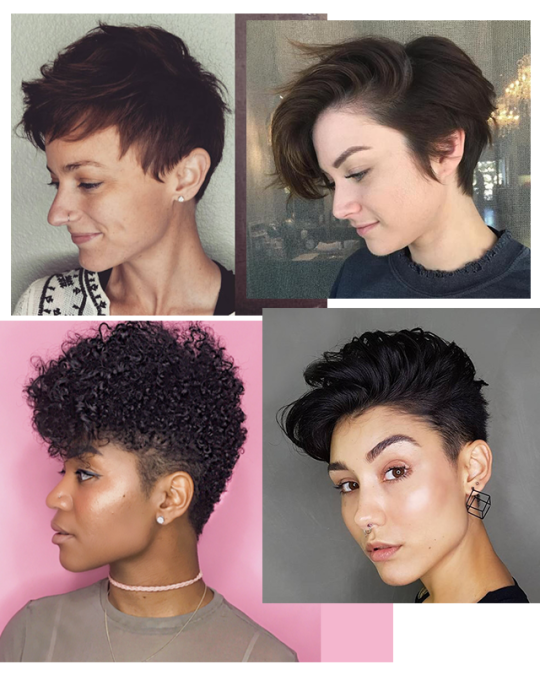
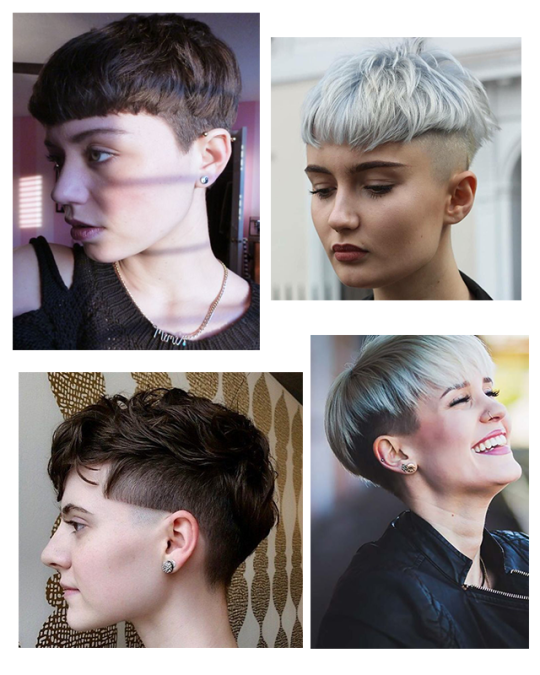
note: don’t know who these are for the most part! they might be gay, i just found them on google images. also this isn’t a ranked list i just like numbers
1. tapered and long
the top two are probably the best approximation of this cut. i like it because it’s floofy but you don’t necessarily have to have curls to pull it off
2. bowl cut pixie
ngl i thought i wasn’t going to like this but i’m actually a huge fan. gives me kind of edgy lisbeth salander vibes. this would be a really good way for femmes to flag too because it’s kinda off center of straight fashion
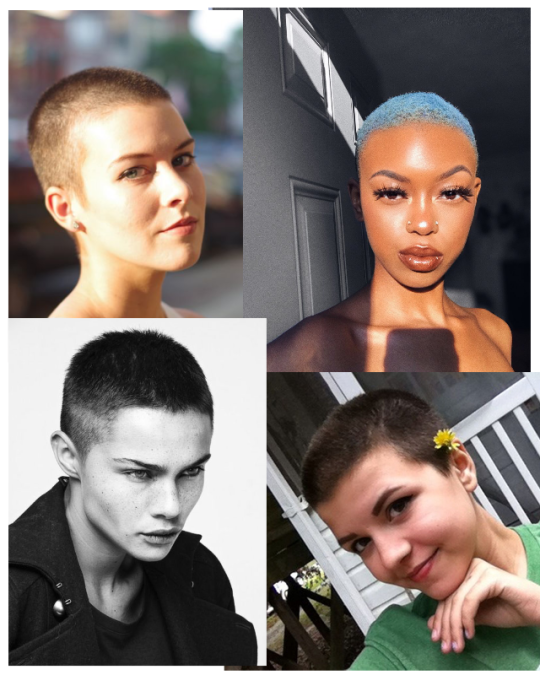
3. buzzcut
a classique and sexie look. buzzcuts looks rly good when they’re dyed if you’re into that (i especially love obnoxiously bright colours). if we’re doing characters, this reminds me of furiosa obviously and we all know she’s a lesbian legend
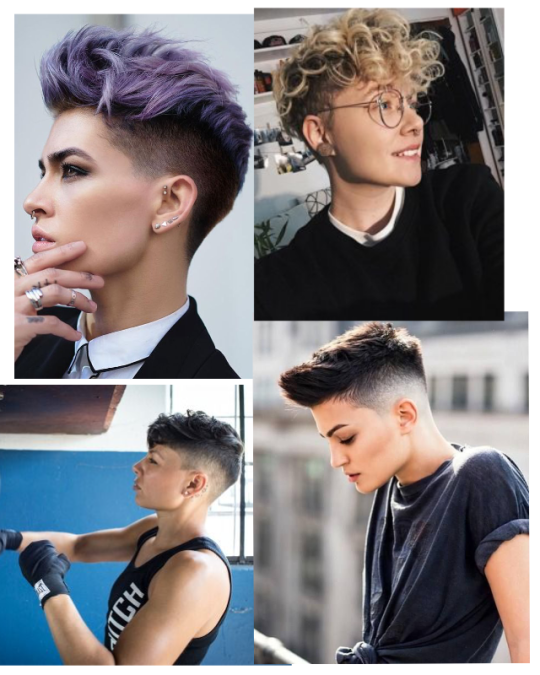
4. undercut
i’m obsessed with undercuts. it looks so so cute with curly hair or straight hair. i also like how it can be really soft or really severe depending on how you style it. it’s also super androgynous
5. short shag
terrible name but a super cute haircut. it’s softer than some of the other ones i have listed if that’s what you’re into. looks cute with curly or straight hair. gives me a bit of baby butch vibes.
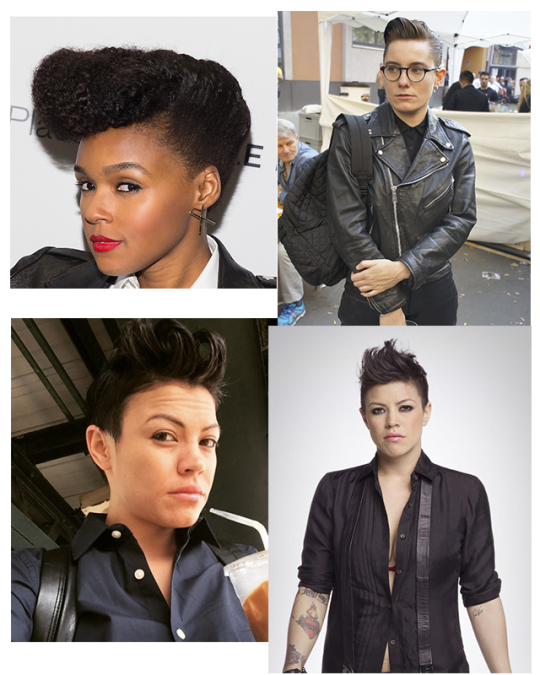
6. pompadour
love it! classic! that janelle monae look? beautiful. it lengthens your face if that sweetens the deal for anyone. very dependable and handsome butch look. would highly recommend.
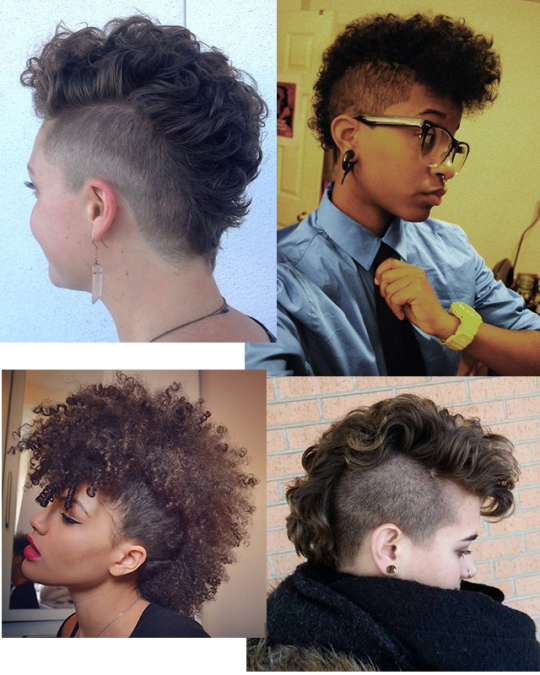
7. curly mohawk
this hairstyle is VERY important to me as a gay because it makes women look beautiful. the top right girl is literally my dream girl. also you can style it soft or really punk which is super hot.
8. random pics of women i found
wow i fuckign. i just love women! look at that! we really do short hair well ladies! thanks for reading my post i hope you enjoyed
As someone that identifies with butch, this makes me happy 😊
I think I might show one of these to my hairdresser next time I get a cut Holy shit I love these
Idk how many people will benefit from this, and I guess some of my tips will help neurotypicals as well, but its 1 am and I camt sleep so here we go. (In no particular order)
Don’t take the hotel soaps with you. In America, this is perfectly fine. They have to throw them away after each person. But in Japan (at least in the hotels I’ve stayed in), they reuse the shampoos and such. You might notice that its a normal size bottle, and has some missing. That’s because they sanitize the outside of the container and leave it for the next guest until it gets used up. There are a few things like toothbrushes, hair ties, and small packages of shaving cream that are more one use that you can take with you, especially if you’ve opened them. Those they have to throw away.
Japanese thermostats are in Celcius, so if you’re American like me they can be tricky to figure out what temperature it is inside. Google can be very helpful here and has an online converter. Some thermostats have a button to change from Celcius to Fahrenheit as well.
To board the airplane early (if you have an invisible disability and have problems with boarding like me), line up with the wheelchairs and people with small children. In America you can explain in more detail and the Tsa will ptobably ask, but in Japan (and Taiwan for that matter, I had a layover flight there), just say “Special needs” and they let you go right ahead.
Speaking of tsa, their website has a customizeable card you can print out and show at security that tells them what your disability is so they can help you get through security smoothly. Mine says I’m autistic, and my dad has one that says he has an artificial hip replacement.
Weighted blankets have to go through additional screening if they are carried in your carryon. For me this meant that it was removed from my bag and the tsa worker felt each of the pockets to make sure there’s nothing hiding in them. The worker was very respectful and did it in front of me, explaining what he was doing as he went along. He let me fold it and put it back in my bag. I’m not sure how Japan does this, since I transferred it to my checked bag after the overnight flight. Ill update when I go home and go through security again.
If you take prescription medication, check a few months in advance if youre allowed to bring it into the country. Some medications are required to be sent to Japan two months in advance for screening (like prescription painkillers). I take Zoloft and it was not required to go through this process, or be declared at customs. Just make sure you keep it on your body during the entire airplane process. Don’t ever put your meds in your checked bag, in case it gets lost.
Google translate app is you best friend. You can take a picture of anything and it will translate it for you, and if you’re having trouble communicating then you can talk or type into the app and it will translate to Japanese and vice versa. Its very fast and easy, and I used it at the angelic pretty store to ask where the changing room was. The employee spoke into the app and it translated for me, so the language barrier was nearly invisible.
Hotel water is mostly drinkable. Sometimes there is a sign, if theres only one sink. But if there is multiple sinks drink from the one that has the tea making supplies next to it. Thats the kitchen sink and potable.
Walk on the left side of the sidewalk and staircases. In Japan they drive on the left side of the road, and walk on the left side of the path as well.
Dont jaywalk. Ever. Only cross the street at marked crosswalks or pedestrian bridges.
If you’re having trouble finding your way, ask a bus driver. They know the city very well and speak English relatively fluently. Don’t stop random people to ask for directions, that’s weird and rude and they might not speak English.
If you have personal space issues, I would recommend getting a taxi or uber as opposed to riding train and busses. Depending on where youre going and the time of day, the latter can be packed like sardines. Taxi/uber are more expensive, but if this is a serious problem for you then definately make room in your budget for this.
Speaking of crowds, if you’re overwhelmed and need to get out of a crowd quickly shout “sumimasen” repeatedly while walking to your destination (I recommend a bathroom). That word means excuse me, and people will understand that you need to get somewhere quickly.
All Japanese coins are marked with the value except for the little bronze one with a hole in the center. Its worth 5 yen.
If you use a mobility aid, you might feel daunted by the amount of stairs everywhere. However, for every staircase there is an elevator, and sometimes an escalator as well. They are typically marked on the walls, but if you can’t find one ask someone who works at the place you’re at. Some crosswalks are the kind that go up and over traffic, but there is a traffic guard underneath who will stop cars and help you cross. I havent tried this for myself, but for my dad who had his hip replaced and has problems on stairs still.
When in doubt, find and information desk.
7-11 has the best atm machines. This might feel really weird, but 7-11 in Japan is much better then America. Its more like a tiny Wal-Mart.
Spaghetti in Japan doesn’t take like spaghetti. It tastes more like offbrand kraft macaroni and cheese with a slight hint of tomato. Its good, but not what spaghetti is expected to taste like.
French fries are often lightly or unsalted. You might want to ask for salt.
The trains are color coded. If you can’t find your line check on a map in the station what color it is and then follow that color.
If there is a raised step in a room, take off your shoes before going through. Slippers are often provided as well so you’re not barefoot or in your socks.
If you go to a cat cafe and talk about your own cat, you might be asked to show pictures to the staff.
Lots of shops have a ban on taking pictures. If you are unsure, ask an employee. “Camera ok?” Is understood and they will answer yes or no. If you can’t find anyone to ask, just don’t take the picture. Its not worth the risk of getting thrown out.
English swear words are common. So is sexual themes. I passed a condom vending machine walking down a main street. If this bothers you, try to ignore it. Honestly theres no avoiding it.
Most plaves have free wifi, but.renting a pocket Wi-Fi is cheap and then you always have a secure connection.
If you’re having trouble ordering food, a lot of places have the menu on the counter with pictures. Point at what you want. This isn’t rude like it would be in America.
Lots of restaurants have fake food in cases outside. I can nearly guarantee you that what you will be served looks exactly like the representation. I’m surprised every time, having grown up with the American standard of “it looks like its been sat on and ran through a washing machine”.
If a store has multiple levels, a good rule of thumb is to pay at each level.
Most stores have a sign that says “Japan tax free”. To get this, you have to show your passport when you check out. Keep your receipt because tsa might ask for it.
A lot of stores only allow tax free on purchases over 5400 yen, or about $54.
Japan tax is 8%
Wall outlets dont have the classic pig nose input. They only have the two vertical lines. Make sure your charger will work with them, or bring an adaptor.
A lot of places have usb chargers built into the wall next to the outlet.
When paying for something, put the money in the little tray on the counter. Never hand it directly to the employee. They might put you change in the same tray or hand it back to you on your receipt, it varies by shop.
100 yen is about equal to $1. It fluctuates but this is a good rule of thumb.
Dont litter. Its a huge fine and possible jail time. Hold on to your trash until you find a trash can. Most convenience stores and vending machines have one.
Thats all I can think of at the moment, feel free to send asks If you have questions. This is by no means a complete guide, just the ramblings of a very sleepy tourist.









 gayfeline